
India’s Next Decade of Sustainable Development

Building a Resilient and Inclusive Future
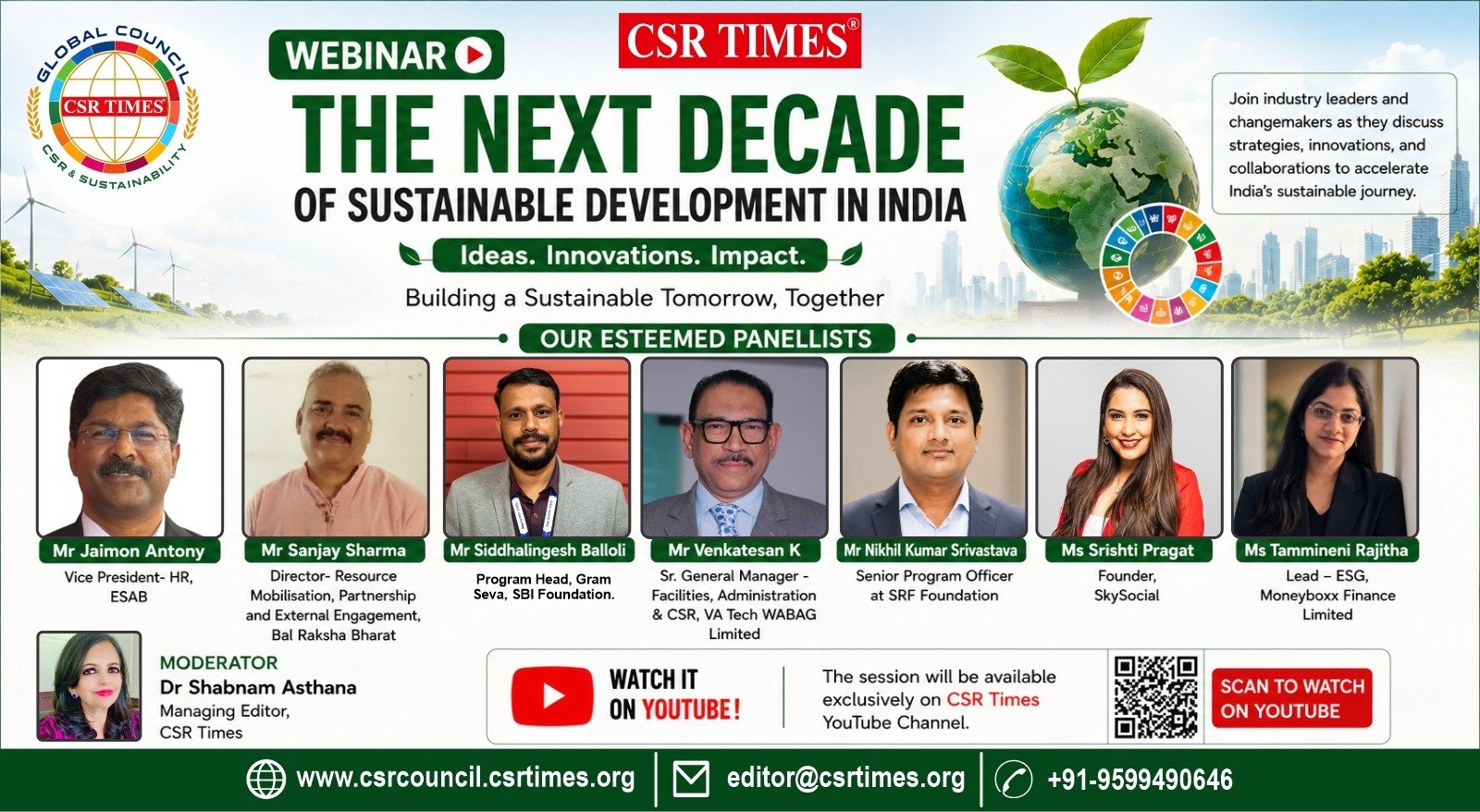
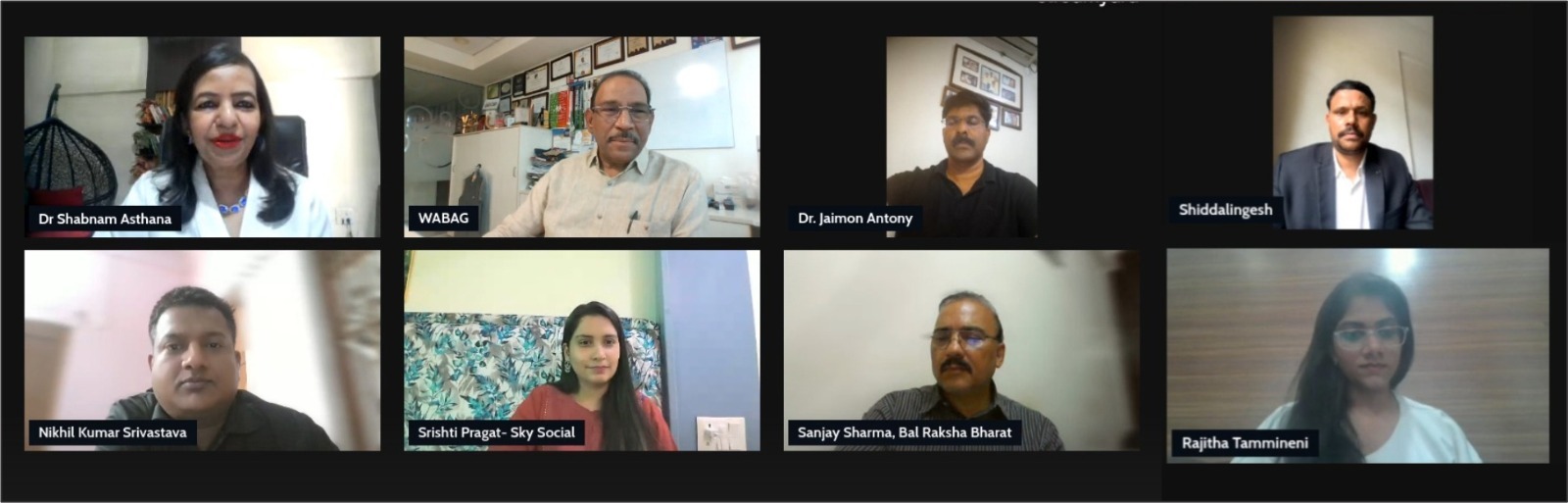
At a recent webinar hosted by CSR Times, thought leaders from the fields of rural development, ESG, human resources, child rights, mental health, sustainability, and community engagement came together to discuss “The Next Decade of Sustainable Development in India.” Moderated by Dr. Shabnam Asthana, the session highlighted both the remarkable progress India has made and the urgent challenges that remain as the country moves toward its long-term sustainability goals. The panellists comprised members of the CSR Times’ Global Council for CSR and Sustainability.
One of the strongest themes emerging from the webinar was the importance of community-led development. Mr Siddhalingesh Balloli, Program Head, Gram Seva, SBI Foundation highlighted the need to empower rural communities to become active stakeholders in development initiatives. Drawing from initiatives such as watershed management and rural resilience programs, he stressed that India’s development goals cannot succeed unless villages and grassroots communities are equipped to take ownership of local solutions.
He linked this vision to Mahatma Gandhi’s philosophy of Gram Swaraj, where villages become self-reliant and capable of sustaining their own development. According to him, the next decade will require programs that are not merely implemented for communities, but designed and driven by them. Capacity building, local participation, and community leadership will determine whether development initiatives achieve lasting impact.
Another key area discussed was the evolving role of businesses and human resource leadership in sustainability. Mr Jaimon Antony, Vice President- HR, ESAB, explained how sustainability has become a strategic responsibility within organizations rather than just a compliance requirement. He noted that companies must now redefine productivity to include sustainable outcomes such as reduced carbon emissions, efficient resource utilization, and responsible environmental practices.
He emphasized that organizations need to develop “green skills” among employees and encourage sustainable workplace behaviors. From reducing energy consumption to promoting circular economy practices and training supply-chain vendors in sustainable operations, businesses are increasingly integrating environmental responsibility into everyday processes.This reflects a broader shift taking place across Indian industries where sustainability is becoming deeply connected to innovation, employee engagement, and long-term competitiveness.
The webinar also brought attention to an often-overlooked aspect of sustainable development: emotional and mental well-being. Ms Srishti Pragat, Founder, SkySocial, argued that sustainable development frameworks must become more trauma-informed and emotionally responsive, particularly for marginalized communities.
She explained that inequality, discrimination, violence, and exclusion create long-term emotional trauma that directly affects participation, leadership, education, and livelihood opportunities. According to her, mental health and gender justice are deeply interconnected, especially for women, youth, and vulnerable groups.
The role of partnerships in achieving sustainable development goals was another major focus. Mr Sanjay Sharma, Director- Resource Mobilisation, Partnership and External Engagement, Bal Raksha Bharat highlighted how India has made notable progress over the past decade in digital inclusion, financial access, infrastructure, healthcare, and education. However, he also noted persistent challenges related to inequality, climate change, urbanization, and last-mile delivery of services.
He stressed that no single institution can address these complex issues alone. Governments provide scale and policy support, corporates contribute innovation and funding, NGOs bring grassroots expertise and community trust, while communities themselves must become co-creators and owners of development initiatives.
Another important perspective came from Mr Nikhil Kumar Srivastava, Senior Program Officer at SRF Foundation, who reflected on the transformative role of education, skill development, and livelihoods in India’s sustainable development journey. According to him, while all three sectors are deeply interconnected, skill development is likely to create the greatest multiplier effect in the coming decade because it directly influences employability, economic participation, and social mobility.
He explained that India’s demographic advantage can only translate into sustainable growth if young people are equipped with industry-relevant skills and opportunities. Skill development not only enhances individual livelihoods but also strengthens families and communities by improving income stability and reducing economic vulnerability
The discussion on environmental sustainability and resource management was further strengthened by the insights of Mr Venkatesan K, Senior General Manager – Facilities, Administration & CSR at VA Tech WABAG Limited. Speaking about water sustainability, he described water security as one of India’s most urgent development challenges over the next decade, particularly in the context of climate change, rapid urbanization, and growing industrial demand.
He emphasized that innovative water management solutions and stronger public-private partnerships will be essential to ensure equitable water access. According to him, India must focus on wastewater recycling, rainwater harvesting, desalination technologies, smart water infrastructure, and community-based watershed management systems. He stressed that water conservation cannot remain limited to policy discussions alone; it must become part of both industrial planning and community behavior.
The webinar also featured valuable insights from Ms Tammineni Rajitha, Lead – ESG at Moneyboxx Finance Limited, who spoke about the evolving role of ESG and sustainable finance in shaping India’s future economy. Drawing from her experience in industrial sustainability and impact-focused finance, she explained that ESG in India is gradually transitioning from a compliance requirement into a strategic driver of inclusive economic growth.
She observed that investors, regulators, consumers, and communities are increasingly expecting businesses to demonstrate accountability not only in profits, but also in environmental stewardship and social responsibility. According to her, companies that integrate ESG principles into their long-term strategies are likely to become more resilient, innovative, and globally competitive in the years ahead.Speaking about sustainable finance, she explained that ESG-led lending and climate-aligned financial models can become powerful tools for inclusive development.
Collectively, the insights shared by the panelists reflected a broader understanding that sustainable development is no longer confined to environmental protection alone. It encompasses economic opportunity, mental well-being, gender justice, community empowerment, responsible governance, and equitable access to resources and finance.
The webinar concluded with a powerful message that India’s sustainable future will depend on collaboration, accountability, and inclusive participation. Whether through community-led rural development, green workplace cultures, trauma-informed social systems, skill development, water security, or ESG-driven finance, every stakeholder has a critical role to play.
Ultimately, the success of India’s sustainability journey will not be measured only by economic indicators or infrastructure growth, but by the extent to which every citizen has access to dignity, opportunity, well-being, and a secure future.
